
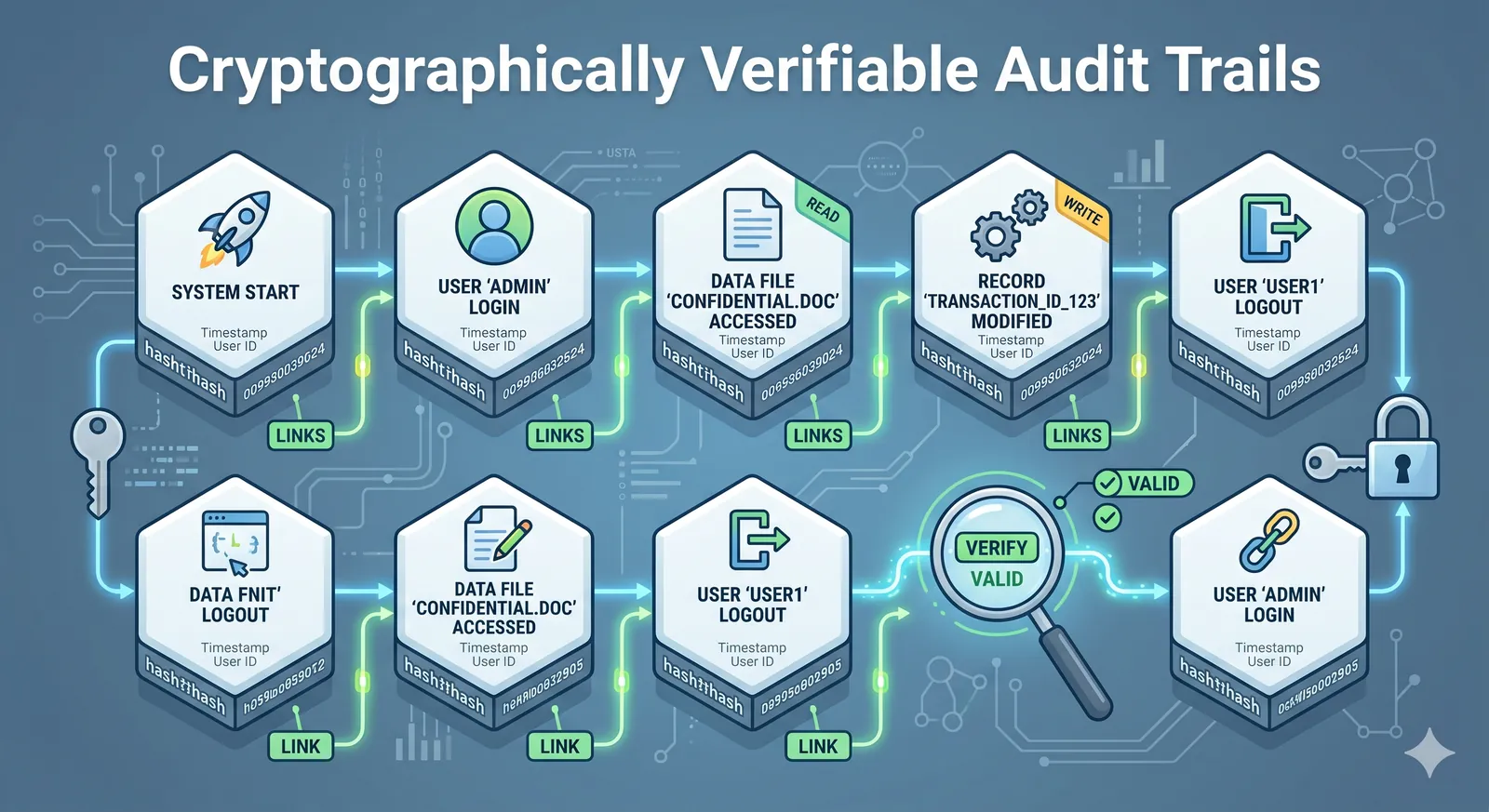
An audit log is only as good as your confidence that nobody edited it. A plain table of events answers "what happened?" — but not "are you sure this is the complete, unaltered record?" For agent actions that may end up in a regulatory or legal context, that second question is the one that matters.
Hash-chaining, briefly
Each record includes the hash of the record before it. Change any entry — or delete one from the middle — and every hash downstream no longer matches, so tampering is detectable rather than silent. It's the same idea that makes a ledger tamper-evident: the integrity of the whole chain is verifiable from the links.
Evidence, not just logs
That property is what turns a log into evidence. Auditors and procurement teams don't have to trust that your record is intact; they can verify it. TrustGate writes every request to a cryptographically chained trace, then streams it to your SIEM and stores it in your own bucket — so the proof lives where you control it, and zero bytes leave your network to produce it.
When the question is "prove this is what happened," a verifiable chain answers it in a way a trusting log never can.